Tampilkan postingan dengan label English. Tampilkan semua postingan

Sabtu, 04 Maret 2017

Borobudure Temple, One of 7 Wonders

b-intro 

 The Borobudur Temple Compounds is one of the greatest Buddhist monuments in the world, and was built in the 8th and 9th centuries AD during the reign of the Syailendra Dynasty. The monument is located in the Kedu Valley, in the southern part of the Central Java, at the centre of the Island of Java, Indonesia.

The main temple is a stupa built in three tiers around a hill which was a natural centre: a pyramidal base with five concentric square terraces, the trunk of a cone with three circular platforms and, at the top, a monumental stupa. The walls and balustrades are decorated with fine low reliefs, covering a total surface area of 2,520 m2. Around the circular platforms are 72 openwork stupas, each containing a statue of the Buddha.

The vertical division of Borobudur Temple into base, body, and superstructure perfectly accords with the conception of the Universe in Buddhist cosmology. It is believe that the universe is divided into three superimposing spheres. "Kamadhatu", "Rupadhatu", and "Arupadhatu", representing respectively the sphere of desires where we are bound to our desires, the sphere of form where we abandon our desires but are still bound to name and form, and the sphere of formlessness where there is no longer either name of form.

At Borobudur Temple, the "Kamadhatu" is represented by the base, the "Rupadathu" by the five square terraces, and the "Arupadhatu" by the three circular platforms as well as the big stupa. The whole structure shows a unique blending of the very central ideas of ancestor worship, related to the idea of a terraced mountain, combined with the Buddhist concept of attaining Nirvana.

The Temple should also be seen as an outstanding dynastic monument of the Syailendra Dynasty that ruled Java for around five centuries until the 10th century.

The Borobudur Temple Compounds consist of three monuments: namely the Borobudur Temple and two smaller temples situated to the east on a straight axis to Borobudur. The two temples are Mendut Temple, whose depiction of Buddha is represented by a formidable monolith accompanied by two Bodhisattvas, and Pawon Temple, a smaller temple whose inner space does not reveal which deity might have been the object of worship. Those three monuments represent phases in the attainment of Nirvana.

The temple was used as a Buddhist temple from its construction until sometime between the 10th and 15th centuries when it was abandoned. Since its re-discovery in the 19th century and restoration in the 20th century, it has been brought back into a Buddhist archaeological site.

Criterion (i): Borobudur Temples Compounds with its stepped, unroofed pyramid consisting of ten superimposing terraces, crowned by a large bell-shaped dome is a harmonious marriage of stupas, temple and mountain that is masterpiece of Buddhist architecture and monumental arts.

Criterion (ii): Borobudur Temple Compounds is an outstanding example of Indonesia's art and architecture from between the early 8th and late 9th centuries that exerted considerable influences on an architectural revival between the mid-13th and early 16th centuries.

Criterion (iv): Laid out in the forms of a lotus, the sacred flower of Buddha, Borobudur Temple Compounds is an exceptional of a blending of the very centra idea of indigenous ancestor worship and the Buddhist concept of attaining Nirvana. The ten mounting terraces of the entire structure correspon to the successive stages that the Bodhisattva has to achieve before attaining to Buddhahood.

Integrity

The boundaries contain the three temples that include the imaginary axis between them. Although the cisual links are no longer open. the dynamic function between the three monuments, Borobudur Temple, Mendut Temple, and Pawon Temple is maintained.

The main threat to the ensemble is from development that could compromise the extraordinary relationship between the main monument and its wider setting and could also effect the Outstanding Universal Value of the property. The approach to the property has to a degree already been compromised by weak development regulations.

Tourism also exert considerable pressure on the property and its hiterland. There is a growing rate of deteriorationof the building stone, the cause of which needs further research. There is also a small degree of damage caused by unsupervised visitors.

The eruption of Mount Merapi is also considered as one of the potential threats because of its deposit acidic ash as happened in 2010.

Authenticity

The original materials were used to reconstruct the temple in two phases in the 20th century: after turn of the century and more recently (1973 - 1983). Mostly original materials were used with some additions to consolidate the monument and ensure proper drainage which has not had any significant adverse impact on the value of the property. Though the present state of Borobudur Temple is the result of restorations, it retained more than enough original material when re-discovered to make a reconstruction possible.

Nowaday the property could be used as a Buddhist pilgrimage site. Its overall atmosphere is, however, to a certain degree compromised by the lack of control of commercial activities and the pressure resulting from the lack of an adequate tourism management strategy.

Protection and Management Requirements

The protection of the property is performed under Indonesian Law No. 11/2010 concerning Cultural Heritage and its surrounding cultural landscape. It is executed under a National Strategic Area and the Spatial Management Plan by he Ministry of Public Works in accordance with the Law concerning Spatial Management No. 26/2007 and Govenrment Regulation No. 26/2008 concerning National Spatial Planning and will be enforced further by another presidentian regulation the Management for the Borobudur National Strategic Area that is still being drafted by the Ministry of Public Works.

The legal and institutional framework for the effective management of the property is regulated by a Presidential Decree umber 1 Year 1992. The established zones within the World Heritage property are respectively under the resposibility of the Borobudur Heritage Conservation Office under Ministry of Education and Culture, of state-owned institute PT. Taman Wisata Candi Borobudur under the Ministry of Enterprise, and of the local government (Magelang Regency and Central Java Province). A study on the integrated management of Borobudur Temple Compunds has been conducted, including attention for the ecosystem, social and cultural aspects, ecotourism, public and private partnership and organisational feasibility study. This study is the basis of the still to be developed visitor management approach.

In order to ensure consistency between the 1992 Presidential Decree and the 1972 JICA Master Plan zone-system indicated in the World Heritage nomination dossier and to strengthen the regulations regarding development, a New Presidential Regulation is still being formulated by a Coordinating Board (14 Ministries and local authorities as well as representatives of local communities) and by formalizing the role of the proposed Management Board into the wider zones. In addition, the protection of the property has been ensured by the regular financial contribution by the national budget.

Monitoring programs has been effectively executed to monitor the growing rate of deterioration of building stone and also by unsupervised visitors. A research is being conducted to determine the long-term impact of deposit acidic ash of eruption of Mount Merapi to set further protection and conservation management of the property. Furthermore, a risk preparedness plan will be fprmulated in 2012.

The Borobudur Heritage Conservation Office has conducted community development programs targeting especially at the youth to raise their awareness. In improving and empowering local community as specialist guide for Borobudur Temple Compounds, several training programs have been conducted.

Kamis, 06 Oktober 2016

Pulau Merah Beach, Picturesque Beach In The Edge Of Java Island

Pulau Merah Beach


 Banyuwangi, located at the most - eastern edge of Java can boast yet another world class surf sport next to the already well known G-land at Plengkung: this is Pulau Merah Beach. Pulau Merah Beach is so called since just some 100 meters to the side of the beach is a picturesque little hilly island called Pulau Merah, that is reachable on foot. This is situation is similar to the location of the island of Tanah Lot to the main island of Bali. Unlike at G-land where are found sharp coral rocks by the beach, the beach at Pulau Merah or the Red Island Beach is open sand so that it is also safe for beginner surfers.

Compared to Bali's Kuta Beach, surf here is stronger, offering large 4 meters high barrels with a length of 400 meters, ideal for surfers to try out tubing techniques. But since surf here comes in at an average of two meters height. beginners and amateur surfers alike can enjoy this beach. Whereas, the beaches at Plengkung and G-land should be ventured by professionals only.

Pulau Merah Beach was originally known as Ringin Pitu. There are two versions for its name change. One version has is because the colong of the soil and sand are reddish, this is where it got its name from, while another story says that at one time some bright red rays shone from the small hilly Puau Merah Island onto the beach, thus giving it the name Pulau Merah Beach. Another feature of the beach is the nearby fishing village called Pancer, where you can stay at villager's home. Their hospitality to visitors in spite of their simple life is truly heartwarming.

Get Around

When you wish to explore Pulau Merah Beach, head tu Pura Tawang Alun. This Hindu temple was built in 1980 and is frequented by Hindus from the East Java's Bromo mountain area as well as from Bali. Unfortunately, the 1994 tsunami destroyed the outer walls of the temple but the inner sanctuary (Palinggih Padmasana) has remained intact. During the tsunami a 13 meter wave swept across the village destroying all including parts of this temple.

During your explorations you will see people wearing bright green uniform. These are gold miners, at a mine found near the shore. Local villagers, however, are opposed to its existence here since the mine pollutes the sea.

Get There

Pulau Merah Beach is one of the many attractive beaches found along the southern coast of East Java. To reach Pulau Merah Beach, you must first fly to Banyuwangi or you can also come in through the airports of Malang or Surabaya, capital of the province of East Java. Closes airport, however, is Banyuwangi.

Located some 60KM from Banyuwangi, the beach can be reached by car or motorbike in three hours, near the village of Sumberagung, in the subdistrict of Pesanggaran. Since access roads are smooth, it has become a favorite weekend destination for Banyuwangi residents. It is advisable to hire a car at the airport of Belimbingsari since there are few public buses heading to Pulau Merah from here.

From the town of Banyuwangi you can take a bus to Ujang Jaya in the direction of Pesanggaran Village. Alight at the Pesanggaran market then continue by ojek or motorbike taxi to Pulau Merah. From Jember, alight at the Jajag terminal, and connect with the bus to Pesanggaran.

Source : http://indonesia.travel/en/destination/point-of-interest/pulau-merah-beach

Selasa, 04 Oktober 2016

The Mighty Mount Rinjani, Lombok, Indonesia

Mount Rinjani


 The Mighty Rinjani mountain of Gunung Rinjani is a massive volcano which towers over the island of Lombok. A climb to the top is one of the most exhilarating experiences you can have in Indonesia. At 3,726 meters tall, Gunung Rinjani is the second highest mountain in Indonesia. The climb to the top may not be easy but it's worth it, and is widely regarded as one of the best views in the country.

Within the mountain is a crescent shaped lake, the breathtaking Segara Anak which is a spiritual place. The Balinese come here each year and perform a ceremony to the mountain spirit. The Wetu Telu people also regard the lake as holy and come here to pray on full moon nights.This lake of sulfur is located 600 meters below the crater rim. Rising from the waters of this lake is a new volcano, Mt. Baru, which is a result of a series of eruptions the 1990's.

Mt. Rinjani lies within the Gunung Rinjani National Park. The park covers 41,330 hectares and sits inside a major bio-geographical transition zone (Wallacea). This is where the tropical flora and fauna of South East Asia meets that of Australasia. This National Park was established in 1997 and is one of over 40 throughout Indonesia.

Three-day Rinjani route from Senaru to the crater rim, down to the Crater Lake the on to Sembalun Lawang, is considered one of the best treks in South East Asia. More adventurous trekkers may want to head all the way to the summit of the volcano. This is best reached from Sembalun Lawang and takes four days, finishing up in Senaru.

Get Around

The most popular way to clim Rinjani is through a four or five days hiking expeition, starting at Senaru and finishing at Sembalun Lawang. Trekkers begin from Senaru hiking to the stunning crater rim, down to the incredible crater lake and then onto Sembalun Lawang. More information about trekking up Mt. Rinjani is available at the Rinjani trekking club website.

Get There

Senaru and Sembalun Lawang Villages are the two starting points to clim Gunung Rinjani. Senaru Village is a three hour drive north of Mataram, while Sembalun Lawang Villages is approximately a four hours drive to the east of Mataram. You can get to Senaru by taking public transport to Bayan and then walking.

Source :http://www.indonesia.travel/en/destination/point-of-interest/mount-rinjani

Jumat, 27 Mei 2016

Trunyan, The Death Village

In death we are equal. But there is a place in northern Bali where what follows sets it apart from the world. A dark place, home to an ancient people with an equally dark reputation, where you can literally stare death in the face.

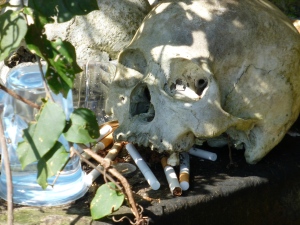
 In Trunyan there is neither burial nor cremation. The dead are taken from the village by boat to a small clearing around the cove. Bodies are partially covered with a thin white cloth, placed under a fragile bamboo cage and simply left. The cadaver is at the mercy of nature and the elements. It is ravaged, rots and decomposes until just the skeleton remains.

Only 11 bodies can lay there. When the space is needed skulls are removed and placed trophy - like on stone shelves. The rest of the bones are discarded, often just casually tossed on the fringes of the clearing. To the Bali Aga, or Original Balinese, all that matters is the souls and that has long since departed.

The people are the aborigines of Bali. Now they account for only two percent of the population. They were usurped by the Hindu - Javanese who came to the island in the 13th century and flourished. The Bali Aga retreated phisically and mentally into isolated communities and remain a breed apart.

P1000235c

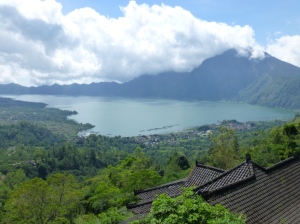
Trunyan itself sits on the eastern side of the mighty crater lake across from Batur Mount, an active volcano. A rock wall rises sheer behind the village. Beyond that is Agung Mount, Bali's highest mountain and a home to the Gods. The Batur caldera is undestandably popular with tourist but only a sparse few venture around the lake to Trunyan. The village's contradiction is to have an ugly reputation while all around is great natural beauty.

Until compartively recently the only way in was to hire oarsmen to row you across the lake. There are legendary tales of the boatmen stopping half way and threatening startled tourist if they didn't pay a hugely inflated price. For those that made it to Trunyan they were often confronted by aggressive begging, exorbitant prices and an intimidating atmosphere.

 A couple of years ago a narrow, potholed and twisting road was opened around the lake. The Bali Aga asked the Indonesian tourism authoritiesfor helpin promoting the village to tourist. Strict promises to change their ways were demanded in return. Prices were to be fixed and transparent and visitors were not to be harmed. Trunyan actually has three cemeteries.

The First, Sema Bantas, is for people who died unnatural deaths. Here, bodies are buried in unmarked shallow graves but without ceremony. The Second was the "baby cemetery", Sema Nguda. A place for the young and the unmarried of any age. Finally, Sema Wayah, the cemetery for which Trunyan is known.

The cemetery is in small clearing, quitnesses is all pervasive. For all the expectation of what cemetery experience would be like the anticipation was more disturbing than the reality. The absence of a new corpse with flesh also helped. As did the remarkable fact that the cemetery never has the smell of death. A giant 'Taru Menyan' tree, from which the villages takes it's name, stands in the corner, it's sweet fragrance and its thick, spreading roots are believed to counter the odours. Around the cove the 'Baby Cemetery' in not blessed with a similar tree.

Trunyan is a fascinating place and the Bali Aga are truly different. The villagers of Trunyan have realised that their traditional play directly to our Western fears of death and the macabre. Their naivety there is a danger that they will turn Trunyan into a kind of 'Disney of Death'.

P1000316

Source:
https://thenony.wordpress.com/

Minggu, 22 Mei 2016

Jimbaran Beach (Pantai Jimbaran)

Everything You Need To Know About Jimbaran Beach


Jimbaran beach and the famous Jimbaran Bay are located on Bali's southwestern coast of the narrow isthmus connecting the Bali mainland and the Bukit Peninsula. The Beach and the Bay of Jimbaran offers small secluded areas, where tranquility and peace are the perfect antidote to a stressful world.

The land gently slopes away from the beach revealing exclusive celebrity haunts hidden under a canopy of leafy tropical forest. Jimbaran is the realm of luxury hotels, the likes of the Four Season Reasort at Jimbaran Bay and the InterContinental Bali Resort & Spa. 

First Time In Jimbaran


On your first time in Jimbaran, this scenic, curving bay will no doubt impress, just 15 minutes south of the Ngurah Rai International Airport. This popular beach in Bali is most famous for its clusters of sunset and seafood restaurants that come in many styles lining its coastline. Beyond that, let us show you all the other highlights that you can see and do on your first visit.

You can enjoy great shopping, from traditional markets to the new and modern Jimbaran corner, as well as nearby attractions that include the iconic cliff - top Uluwatu Sea Temple and its adjacent amphitheatre where you can view the dramatic Kecak dance at sunset. You can then continue on to the famous Rock Bar for cocktails in a most dazzling setting, or return to Sundara on the bay for libations under the stars. Here are a few hints for your first time in Jimbaran.

Rock Bar

Amazing Sunset Chill Outs In Bali


Rock Bar Bali at Ayana Resort and Spa wins accolades from travel media the world over, partly thanks to its unique setting on a secluded limestone cliff. This premier sunset venue continues to win the hearts of patrons, some who fly to the islands just to experience the signature cocktails, exceptional views, and moody set by its resident music director and a regular line - up world - class international DJ's.

The Rock Bar boasts a minimalist design with an open - top platform seamlessly built onto the natural formation. Ambient lighting from around the bar and the shades at sunsets, together with traditional fishing boat lanterns that dot the seascape add to the dramatic appeal of the bar.


Getting to the Rock Bar itself is an experience. Past Ayana's green cliff - top lawns you'll notice two ways to descend, and both provide spectacular bird's eye views. First is the 'hard way' down the extended flight of stairs that leads you to the Kisik Bar & Grill, which serves fine seafood under a thatched roof retaurants and at the tablets on the sand. Continuing to the Rock Bar, you stroll along the cliff base causeway around Ayana's free - form ocean beach pool.

The second access is and effortless option, by means of a funicular ride down. However, expect queues, especially moments berofe sunset time. Queues are divided into two, one of which is a 'fast lane' reserved for hotel guests - one of the perks of staying at the Ayana. If you have the energy, we'd recommend going the 'Hard Way' as there are several stops alongs the descent that provide you memorable scenic and photographic moments of the seascape and horizon, the beach and cliff base, and most of all, the Rock Bar.


Perched 14m above the waves, the Rock Bar is a small centrepiece with the vast sky and Indian Ocean as backdrop. There are several round tablets at the lower foyer and eight more steps up leads you to the main bar, which is bordered by glass screens. The Rock Bar's innovative design was conceived by Yasuhiro Koichi of Japanese design studio Spin. Wooden deck areas provide additional viewing points on both sides of the main rock that stretches along the coast, one of which is accessed via a natural cave. The cave walls sparkle with what seems to be crystal, quartz - like minerals.

The bar centrepiece was built using thousands of layer of recycled glass canes, and was created by Bali - based Japanese glass artist Seiki Torige. The barmen and team of beautiful waitresses cald in elegant, signature black outfits are swift and gracious. At the centre of the all - weather wicker tables are unique upright cylindrical menus. The moment you get here and just in time for sunset, pick a spot and go straight for the cocktails.


Among the favourites are the Rock Bar'a martinis, comprising quirkily - named blend such as Punch Rock, Rockberry Martini and Spa on the Rock, the latter comprising vodka, blackcurrant liqueur, blueberry and cranberry juice. Spa on the Rock is also the name of Ayana's equally dramatic spa option located on the resort's southern coastline. The cocktails were designed by inernational bar consultant Sebastien Bonnefoi, using imported liquors blended with local fruits, herbs and spices to complement the natural setting. Simple bites include a tray of crispy calamari served with stone bowls of spicy tomato sauce, prawn spring rolls with chilli sauce, and chicken popcorn served in a spiral cone stand with herbed olive oil and spiced Egyptian duqqa dip.

Besides resident music director Martin East leading a stellar DJ line - up spinning Mediterranian beats, Nu - disco, deep house, and chill outs every sunset and late night weekends, international Ibiza and Indonesian guest DJs have also 'Rocked' the Rock, such as Jez Colin and Jakarta DJ Riri Mestica, spinning tunes from a special booth carved into the rock face. Eleventh - hour schedules include international bands playing exceptional unplugged sessions, such as previous gigs that featured Stephan Jenkins and his band Third Eye Blind, Alma Desnuda, blues king Jim Larkin, and other acts from Down Under and The States.


Jimbaran Seafood Cafes

Sunset And Seafood At Jimbaran Bay


Jimbaran seafood cafes must already be on your must - visit places for your Bali holiday, especially f you're a seafood lover. Not only is Jimbaran Bay one of Bali's best place for memorable sunsets, but it also the most popular coast to enjoy grilled seafood. Seventeen seafood cafes line the white - sand beach locally known as 'Pantai Muaya'.

Mostly open afternoo until late, each of the venues within the row of Jimbaran seafood cafes in the bay offer fresh - grilled seafood served at candlelit tables on the sand. As the sun goes down, the horizon features faint light from the Ngurah Rai Airport and Traditional fishing boat lanterns at sea.

The Cafes


You'll notice similar setups as you approach the Jimbaran seafood cafes from the beach; wooden tables with parasols down to the tide's edge and some adorned with attractive palm leaf decorations. Drop - off from the main entrance and you'll see grills and live seafood displays under signboards of each cafe that show different stock and 'Catches Of The Day'.

From several dinners we had at different cafes, we noticed slight variations in the homemade sambal (Indonesian traditional chili sauce) in form and spiciness. Menega and Intan Sari are quite consistent in terms of stock and taste (usually getting most of the crowds); while others, Bela for instance, boast gimmicks such as torches and attractive table setups. Mild competition among these venues means good service; staff and waiters are attentive and speak simple English.

The Food


Ease into a chair as a small dish of salted nuts and/or kerupuk shrimp crackes comes served as intro to accompany your beer or drink of choice. Birthplace of ikan bakar Jimbaran or 'grilled snapper a la Jimbaran' with the essential sambal, these cafes offer selections of red snapper, crab, calamari, prawns and lobster served with steamed rice, and traditional side dishes of spicy plecing kangkung (stir - fried water spinach) and fresh fruit platters for dessert. Use your finger as part of the experience; a bowl with water and slice of lime comes as standard 'Rinse'.

Look out for two sambal varieties, the fames red paste and another pungent version called sambal matah (comprising fresh chopped chilli, shallots and lemongrass). Try out both if you can handle, or simply ask for modified, milder version in advance. Some of the Jimbaran seafood cafes even have French Fries, Fried Rice, Chop Suey and other Western and Asian Cuisine on their menus for variety, and even expand their seafood selections to Baraccuda, Grouper, Mahi - mahi and Kingfish.

Source:
http://www.bali-indonesia.com/

Sabtu, 21 Mei 2016

Padang Padang Beach

Popular Beach And Surf In South Bali


Padang Padang Beach, locally referred to as Pantai Labuan Sait, is one of Bali's most famous surf sports, located on the north - western coast of the island's Bukit Peninsula, and just a kilometre southwest of the Anantara Bali Uluwatu. This Beach features an exotic setting; a simply stunning one hundred meter - long stretch of sand that is accessible down a flight of stairs through a unique hollow rock entrance. The surf has a steady set of barrels during good weather, attracting wave riders from around the world.

Part of the group of world - class surf sports that line the coast of the Southern Peninsula, Padang Padang Beach lies several kilometres in between Bingin and Uluwatu, among which surfers usually hop to interchangeably for a different set of challenges and another thrill for the day. This beach is also a regular spot for international surfing events, the Rip Curl Padang Padang being the most frequent.


Heading up along Jalan Raya Uluwatu from Jimbaran and around 30 minutes' drive past the Garuda Wisnu Kencana Cultural Park, a junction with signs that clearly bear 'Jalan Labuan Sait' leads you along a hilly but smooth 3.5km asphalt route. This region has developed with its rise to fame over the past decade, and is now lined with shops, surf lodges and neat western - style cafes targeted at the surfing crowd.

Beach access is down the slope across the road from a large parking area. Prior to this is a bridge that connects the two sides of the limestone cliff, offering a glimpse down to the beach from up high. Halfway down the flight of stairs is a temple that overlooks the surf, and sharing the coastal forest features with Uluwatu, you will occasionally witness playful grey long - tailed macaques playing around the stairs on the Balinese 'gapura gate', and high up in the acacia trees. A fun fact: Padang Padang Beach was featured as a romantic setting in the 2010 big - screen adaption of 'Eat, Pray, Love'.


One you reach the bottom of the stairs, you are greeted by a gorgeous sight: a fringed beach with fine, white sand, blue waters and a distant horizon. There are board rentals here provided by the locals if you don't have your own but would like to try (Warning: The waves here break over shallow coral and are not suitable for beginners). Although the big waves beyond the reef breaks are limited to advanced surfers, the shore is great for family fun and leisure, and there are local warungs on Padang Padang Beach serving light meals and refreshments. Sand castles, splashing, sunbathing, lying down with a good read under a parasol, or simply sitting back to enjoy the exotic views.


Source:
http://www.bali-indonesia.com/

Tanah Lot Beach, Bali Surfing Point

Tanah Lot Beach.

Tanah Lot, Bali, Beach, Temple, Surf, Spots 

Tanah Lot Beach is a beautiful rocky coastline and famous throughout the world because if the unique Hindu temple set on the big rock and encircled by the seawater. This beach is one of the favorite tourist destinations for tourist who being holidays in Bali Island due to blessed by the stunning panorama, peaceful atmosphere and the unique temple. This place is many cisited by tourist everyday from over the world especially during sunset that creates the breathtaking view and romantic nuance. The location of Tanah Lot Beach is apposite to the India Ocean hence it is featured by the great weaves that is ideally for surfing adventures. There are two surf sports available that give the alternative for surfer to choose the surf sport at Enjung Galuh or Batu Bokong Temple.

Tanah Lot Beach is located in Beraban Village, Kediri District, Tabanan Regency and Bali province - Indonesia. It can be reached about 20 minutes from Tabanan town or 30 minutes from Denpasar City of 1 hour from Denpasar Ariport. Since Tanah Lot has been appointed as a tourist destination, this area quickly growth and completed by the public facilities as a value added for tourist who visit this place. The good access has faciliated every visitor to visit this beach that is situated close with other famous surf points such as Muara Beach, Front Hotel Beach and Kedungu Beach.

Best Season for Surfing

Tanah Lot is geographically located in south part of Bali Island and right side of Bali's Peninsula hence the best season to go for surfing is on dry season. It is because on this season the wind flows from the southeast to the west that create the good wave for surfing adventures.

Tanah Lot, Bali, Beach, Surf Spots, Panorama
Panorama


Tanah Lot, Bali, Beach, Surf Spots, Batubolong Temple
Batu Bolong Temple


Tanah Lot, Bali, Beach, Surf Spots, Low Tide
 Low Tide
Tanah Lot, Bali, Beach, Surf Spots, Cliff Jumping
Cliff Jumping

Tanah Lot, Bali, Beach, Surf Spots, Hole Stone Surf
Hole Stone Surf

Tanah Lot, Bali, Beach, Surf Spots, Small Waves
Small Waves


Tanah Lot, Bali, Beach, Surf Spots, Reef Surfing
 Reef Surfing


Tanah Lot, Bali, Beach, Surf Spots, Small Barrel
 Small Barrel
Tanah Lot, Bali, Beach, Surf Spots, Surfer Maneuver
Surfer Maneuver

Tanah Lot, Bali, Beach, Surf Spots, Sea Surfers Meeting
 Meeting in the Sea
Tanah Lot, Bali, Beach, Surf Spots, Flag Surfers
Flag Surfer

Tanah Lot, Bali, Beach, Surf Spots, Batu Bolong Surf Spot

Batu Bolong Surf Spot

Source:
http://www.bali-indonesia.com/

Kuta Beach

Kuta Beach

Everything You Need To Know About Kuta Beach


Kuta Beach is located on the western side of the island's narrow isthmus and is considered Bali's most famous beach resort destination. Kuta Beach is also minutes away from the Ngurah Rai International Airport in Tuban. The Nearby resorts of Tuban, Legian and Seminyak are all within close walking distance.

Once a simple, rustic and quiet fishing village, Kuta Beach has witnessed a transformation over the past years due to the rise of vaious accomodations, dining and shopping options. The rapid growth owes much to visitors, beachbombers and art lovers from nearby Australia. Expatriates also helped pioneer surfing in Kuta, as well.

Although a rather frenzied traffic scene has become commonplace here, Kuta Beach continues to attract thousands of visitors every year with its unique charm. During the peak season from July to August and the holiday season for Christmas and New Year, Kuta beach is regularly fully - booked by travellers looking forward to a pleasant and affordable Bali escape.

First Time In Kuta

What To Do In Kuta In One Day


Plan Your first trip to Kuta with this quick guide that provides you with a few of the best ideas you can see and experience on your first day. Most hotels here have Bali's famous sand and surf mere step away, and the same can be said for world - class dining and chilling while overlooking Kuta's dramatic sunsets.

There's great shopping spots along the main footpaths of Kuta's Jalan Pantai main beach road, as well as on its southern part with the Discovery Shopping Mall right across from one of Southeast Asia's premier waterparks, the Waterbom Bali. Kuta is also conveniently ight next door to the Ngurah Rai Airport in Tuban, making it an ideal destination for brief stays, and the island's liveliest nightlife scenes are just around the corner in neighbouring Legian and Seminyak. Here are a few to help you plan ahead.

Kuta Beachwalk

A Grand Shopping And Dining Complex In Kuta


Kuta Beachwalk is a fresh addition to Kuta's Leisure alternatives. Occupying 3.7 hectares of land and a 250 - meter street side near the end of Jalan Pantai Kuta, this striking complex houses numerous shops, restaurants and entertainment facilities boasting international brands and franchises. The Beachwalk is a first for Bali, sporting a unique design that is to some extent a major departure from the typical mall.

A two - storey underground parking space for up to thousand vehicles makes up for this position on ona of Bali's most packed streets. It aims to become a leading destination, and has received a steady flow of local and international visitors since its opening mid 2012. Beachwalk complements the four - star Harris Resort Kuta Beach next door and the upcoming five - star Sheraton Bali Kuta Resort.


Kuta Beachwalk is an easy stroll from the beach, and stepping into its foyer is a retreat from the coastal heat. Its main building architecture, large ponds and running water features imitate the curves of paddly field. Even though a tad bit synthetic, its wide central atrium does provide natural airflow, ample shades and real gardens. What's more, the team behind the project applied eco - friendly measures in its sustainable design, including minimum air - conditioning in open space and a special rainwater collection system.


Shopping a Kuta Beachwalk

The price range here is on the luxury side. Various outlets behind large windows line the curvy arcades and it represent a complete boutique shopping experience. Here you'll find the popular brands:

  • Armani Jeans
  • Boss Sports
  • Furla
  • Tommy Hilfiger
  • Versace Jeans
  • Diva
  • GAP
  • Gaudi
  • Mango
  • New Look
  • Pull & Bear
  • Staccato
  • Urban Icon
  • Watch World
  • Stradivarius
  • (X) S, M, L
  • Y3
  • The Face Shop
  • Yves Rocher
  • Travelogue
  • Rimowa
The brands for kid include ELC (Early Learning Centre), Gingersnaps and Playskool which offer the finer quality, imported toys and apparels.

Dining at Kuta Beachwalk


Kuta Beachwalk is a great place to go ravenous, choose from a large variety of cosy outlets including the Eat & Food Court that serves Indonesians classic dishes, conveniently located at the second floor's centre alongside a children's play facility. Seminyak's renowned Bali Deli has opened an outlet here, as well as Ku De Ta with its Sienna Cafe. The Kitchenette serve galettes, crepes and salads, and Luna Negra offers delicious Italian cuisine.

Other franchise outlets, somewhat a fixture in many Western malls that might ring a bell include:
  • Buffalo Wings & Rings
  • Coconut Joe's
  • Dairy Queen
  • Fish & Co
  • Johnny Rockets
  • Wowcow Yogurts
  • Kihana Japanese Restaurant
  • Pazia Cafe
  • Rollaas Cafe
  • Tapeo Tapas Bar

For Families


Envisioned as a family and weekend destination, Kuta Beachwalk boast a dedicated kid's play centre called the Miniapolis Bali. Among the fun features, include the Play Zone, the Amazing Walk, Water Play, and a day - care facility called Cheeky Monkey. These are sure to provide parents a good timeout they need. Other attractions include a Cloth Museum by renowned Indonesian Batik, Ikat and heritage textile producer Bin House; an open stage featuring exciting musical fountain show as well as scheduled dance performances.

Other highlights of Kuta Beachwalk


International visitors will find familiarity with the new restaurant franchises, while locals will enjoy additional choices to that available elsewhere. Fixed tenants include the new XXI Cineplex, which answer the high anticipation for more quality cinemas on the island. SATU and Moeda are multi - brand boutiques featuring collections from Bali - based designers worth checking out.

Other services and facilities available at Kuta Beachwalk include a valet service and concierge, banks and moneychangers, a supermarket and salons. If the boutique price tags keep your wallet at bay, you can always mingle and admire the complex's airy spaces with high views over Kuta's beach and sunsets, and the nice tropical gardens, ponds and fountains.

Mal Bali Galeria

Mal Bali Galeria is a large shopping complex conveniently located at the Simpang Dewaruci landmark and roundabout in Kuta. The expansive shopping and entertainment precint boast a 'family mall' concept, carrying a slogan of 'enjoy, play, eat, shop'. Various tenants, outlets and event highlights make it a favourite destination among locals and visitors.

Besides shopping and dining, Mal Bali Galeria is also popular leisure venue where different 'happenings' regularly occur on its calendar of events. These mostly take place in its large atrium referred to as the 'dome' with a large central fountain. Adding to the convenience factor is a three - storey car park, as well as a dedicated open parking space for motorcycles in its eastern ground level.

Mal Bali Galeria Highlights


Flanking southeast of the notable Kuta roundabout, Mal Bali Galeria's most prominent building is that of the DFS Galleria Bali duty free shop.

DFS Galleria Bali is part of the DFS Group Limited, the world's leading luxury retailer catering to the travelling public. Various international luxury items can be found here, from women's fashion, beauty, skincare and fragrances, men's watches, accessories and premium leather goods, to a range of liquors.

The International luxury brands at the DFS Galleria include most of the notable names such a Dunhill, Bulgari, Cartier, Calvin Klein, TAG Heuer, Givenchy, Versace, Hermes and Kenzo. There are also local quality handcrafted products available.

The Mal Bali Galeria site comprises three main physical divisions. The DFS and Planet Hollywood is at the front, while a second building houses the Galeria 21 Cineplex, the island's premier cinema complex which screens the latest international blockbuster titles in its two screens. And the third and main building, located futher east nto the grounds, is where the proper 'mall' features can be found.


Various separates stores and a mixture of outlets can be found inside the third mall building. The Matahari Bali Galeria department store offers a range of fashion products and necessities. ACE Hardware at the west end of this building offers imported Do - It - Yourself and home improvement products and occupies a significant amount of space.

Throughout the mall and around the atrium are various outlets, from dinng spots to branded sportwear, beauty salons and optical stores. L'Occitane, The Body Shop, NCC Restaurant, Cafe Minka, Ryoshi, Kafe Betawi, Warung Warung, Es Teler 77, Salvador, Sushi Kiosk, Coldstone Ice Cream, Sour Sally Frozen Yoghurt, Starbucks, Kidz Station, Roti Boy, J.Co Donuts, Crocs, Fix Design, King Coil, Maxim, Rumah Kita, Vinoti Living, and much more. On The second floor above the main 'dome' entertainment area you will find the Gramedia Bookstore.

Balinese architecture blends neatly within a modern mall style, and fine lawn and small gardens with benches add to the cosy shopping atmosphere. To further unwind, professional salon services are provided at Johny Andrean, Yopie Salon and Salon Learin. The entertainment highlights and events mostly take place over the weekends.

Good to Know about Mal Bali Galeria


Usually, duty free concessions are operated as airport stores: the travelling public can depart with their purchases without using or consuming them at the location. In some cases, off - airport stores are included in these concessions. Departing customers select and purchase goods at the off - airport store, such as a DFS Galleria, and the merchandise is delivered to them at their airport departure gate when they leave.

There are two entrances and exits to the site, one just past the DFS Galleria building, and the other just north of the parking area which leads to the Jalan Bypass Ngurah Rai. The main third building of the mall features various entrances and exits at all of its four sides. An ATM corner as well as money changer booth is nearby the ACE Hardware section at the mall's western side.

Transport services are available at the main lobby. An information desk is located near the entrance at the atrium where the drop off area is also located. The pickup zone is at the main lobby ground floor exit.

Movie tickets at the Galleria 21 Cineplex are IDR 40,000 on weekends and public holidays, IDR 20,000 from Mon - Fri and IDR 30,000 on Sat.


Kuta Square in Bali

Kuta Beach Shopping


Kuta Square is a popular shopping arcade in Kuta 200m north of Kuta Art Market, and is located approximately 50m from Kuta Beach. The two - way avenue is flanked by rows of fashion stores and dining outlets.

The Matahari Kuta Square department store, boasting a hypermarket and fashion stores within, shares the same locality with an assortment of surf wear retail outlets, franchise restaurants, ice cream and fresh juice parlours, and local jewellers on both sides of the avenue.

Kuta Square starts at the Kuta Art Market, straight ahead north from Jalan Kartika Plaza and is a right turn from the one - way Jalan Bakung Sari. Those coming in from Legian and heading south towards Kartika Plaza also go through Kuta Square, This two - way option between Legian and Kuta makes its a strategic and often navigated route, thus the intermittently busy traffic.

The Matahari Kuta Square shopping mall on the eastern side of the avenue is the largest building in the vicinity. On the western side, the Inna Kuta Beach Hotel divides Kuta Square and Kuta Beach. The mall features two entrances with the main entry on Kuta Square and a drive - up entrance from Jalan Kartika Plaza.

The Matahari department provides a lot of variety on its four floors, including a food court on the fourth. Here, you'll find groceries, necessities, snacks, souvenirs, and fashion items as well.

Step outside to hunt for the famous name brands. Designer items such as Armani, Gucci, Versace and Donna Karan New York highlight the street sides with posters and mannequins in glass displays. Local quality brands such as Animale, Milo's and Body & Soul can also be found here. Local jewellers such as Suarti and high - end batik outlets also offer unique items to visitors.

Most of the surfing and sport brands line the western side of Kuta Square, with big names like Dreamland Surf, Kuta Lines, Quiksilver, Volcom Stone, Nike, Adidas, Rip Curl and Billabong being the most prevalent. Restaurant line the eastern side, with the likes of Kentucky Fried Chicken, MacDonald's, Haagen - Dazs and others adding to the variety of choices.

Good to Know about Kuta Square


Kuta Art Market offers miscellaneous art amd souvenir items at prices you can bargain down. The rest of the stores along Kuta Square on the other hand, are fixed priced and retail high - end goods.

There are several money changer at Kuta Square. Always try to use authorised money changers or a bank. Small, unauthorised street booths, despite their official look, should be your last resort.

The best way to experience Kuta Square shopping is by foot but be careful: The high number of motorcycles on Bali's streets can make crossing the road hazardouz.

Source:
http://www.bali-indonesia.com/